

Cost & Planning
Cracked Concrete Driveways and Patios in the New Orleans Metro: Resurface or Replace?
Cracked or sinking concrete on New Orleans delta soil? When patching or resurfacing holds up, when it fails, and when pavers make the better replacement.
Written by Big Easy Paver Patios
Key Takeaways
- A cracked concrete driveway in New Orleans usually means the ground under it moved, and a fix that ignores why won’t last.
- Hairline cracks on a slab that still sits flat can be sealed and watched. A slab that has dropped or broken into loose pieces is a replacement conversation.
- Resurfacing and slab lifting treat the face or the height of the slab. Neither one changes the soft, wet soil that caused the damage.
- Pavers swap one rigid slab for many small units that can be lifted and reset when the ground settles again.
- Inside New Orleans, a driveway that connects to a public street needs a city permit, and state law requires a Louisiana 811 notice before digging. Call Big Easy Paver Patios at (504) 688-4244.
Why Does a Cracked Concrete Driveway in New Orleans Crack in the First Place?
Quick Answer: Concrete handles weight well when the ground beneath it stays put, and it cracks when that ground gives way unevenly. Across the New Orleans metro, driveways and patios sit on soft Mississippi delta soil with a high water table, and summer storms push water under slabs again and again. When one part of the soil settles faster than the part next to it, the slab bends over the low spot and breaks. The crack you see is the symptom. The cause sits below it.
Some cracking is normal. Concrete shrinks as it cures, and control joints give that shrinkage a planned place to happen. A thin crack near a joint on a flat slab is rarely a structural problem. Watch for cracks that change from one season to the next, especially once one side starts sitting lower than the other.
When our crews look at a slab that keeps getting worse, the cause usually falls into one of these buckets:
- Uneven settlement. Soft alluvial soil compresses under load and over time, and it rarely does so evenly across a long driveway.
- Water under the slab. A downspout that empties at the edge of the concrete, or a grade that sends rain underneath it, washes fine soil out and leaves voids.
- Tree roots. Roots grow wider every year and lift whatever sits on them. LSU AgCenter notes that live oak root systems can break concrete sidewalks and driveways.
- Heavy loads at the edges. A thin slab edge cracks when heavy vehicles roll over it, and broken corners let more water in.

Which Cracks Can You Live With, and Which Ones Can’t Wait?
Walk the slab after a hard rain, when problems are easiest to spot.
- Hairline cracks, slab flat: usually cosmetic. Seal them to slow water getting in.
- Wider cracks, slab still flat: seal them and mark the ends, then check again in a few months.
- One section lower than the next: the soil under it has moved, and the lip at the joint is a trip hazard.
- Pieces that rock under a car: the slab has lost its support, and a surface patch won’t hold.
- Water standing on the slab: the grade is working against you and feeding the next crack.
If your driveway lands somewhere in the middle, a look from someone who builds on this ground can keep you from paying for the wrong fix. Our post on why pavers settle in New Orleans walks through the same soil and water causes from the paver side.
What Can a Repair Do for a Slab That Hasn’t Failed Yet?
Repairs make sense when the slab is mostly sound and the movement has slowed down. None of them changes the soil.
Crack sealing and patching
A flexible crack sealant keeps water from running into the crack and washing out the soil below. A concrete patch rarely matches the original color or texture, though, so plan on seeing it.
Resurfacing overlays
A resurfacing overlay is a thin cement-based coat bonded to the old slab to give it a fresh face. It can hide surface wear and small cracks on concrete that has stopped moving, but it tends to crack again wherever the slab underneath keeps shifting. We won’t quote a lifespan for overlays, because the honest answer depends on the product and on how much the concrete below is still moving.
Slab lifting
Slab lifting fills the void under a sunken section with an expanding foam or a pumped cement slurry and raises the concrete back toward level. It can work on a section that dropped in one piece. It can’t put a broken slab back together, and soil that settled once can settle again.
Grinding a trip lip
Where two sections meet at slightly different heights, grinding down the high edge removes the trip hazard. Iowa State University Extension describes grinding raised sidewalk sections as a temporary fix when tree roots are the cause, since the roots keep growing.
When Does Replacing a Cracked Concrete Driveway in New Orleans Make More Sense?
Replacement is usually the better use of your money when you see any of these:
- more than one section has dropped or tilted
- the slab has broken into pieces that move
- water sits on the drive or runs toward the house after storms
- roots under the slab will keep lifting whatever goes back over them
On delta soil, a new slab poured on the same soft ground, with the same drainage, can put you right back where you started. Concrete can still be the right choice on some lots, because the base and the water plan decide how long any surface lasts. Our comparison of pavers vs concrete in New Orleans goes deeper on how a rigid slab and a flexible paver field behave when the soil moves.
What Changes When You Replace Concrete With Pavers?
A paver driveway or patio is a field of individual units sitting on a compacted aggregate base, held in place by edge restraint and joint sand. When a section settles, those pavers can come up so the base can be corrected, and then the same units go back down. There’s no patch line to live with, which is why paver repair and releveling in New Orleans is a routine visit here instead of a demolition job.
What happens underground matters more than the paver you pick:
- Tear-out. The old slab comes out completely, along with any soft or wet soil right below it.
- Base depth. A driveway carries vehicles and needs a deeper compacted base than a patio. Our paver driveway cost guide explains why the base is most of the job.
- Drainage. Grading and channel drains move water off the surface and away before it can undermine the new work.
- Pattern. Herringbone interlocks well under turning tires, so it’s a common pick for driveways. See herringbone vs running bond for the tradeoffs.
A cracked concrete front walk can come out and go back as pavers too, which is the core of our walkway and pathway work in New Orleans.
Do You Need a Permit to Replace a Driveway in New Orleans?
Inside the City of New Orleans, you do if the driveway connects to a public street. The city’s Driveway or Curb Cut Permit page says the permit is required if you plan to “install, replace, or repair a driveway that connects to a public street.” The Traffic Division of the Department of Public Works manages it. You apply through the city’s One Stop website, and when we checked the page in September 2026 it listed a $100 non-refundable application fee, with inspection fees possible on top.
The city’s published Driveway / Curb Cut Permit Requirements set design standards for the driveway or curb cut you propose. They call for Portland cement concrete with a compressive strength of 4,000 psi at 28 days, at least 6 inches thick for a standard driveway and 8 inches for a heavy-duty one. For rollover curbs, a single-lane driveway can be up to 12 feet wide at the property line and a two-lane driveway up to 24 feet. A separate section on driveway aprons sets slope limits where the sidewalk crosses the driveway. Because those standards are written around concrete, ask the city how they apply to a paver driveway at your address before you design one.
Before anyone digs, state law applies too. Louisiana R.S. 40:1749.13 requires notice to the regional notification center, Louisiana 811, at least 48 hours and no more than 120 hours before excavation starts, not counting weekends and holidays. Digging out old base and soil for a new driveway is excavation under that law, so the call belongs on the schedule before tear-out.
Outside Orleans Parish, the offices change. Jefferson Parish and St. Tammany Parish run their own permit processes, and so do cities such as Kenner and Mandeville. Our post on patio permits in the New Orleans area covers why the parish line matters. In the French Quarter, the Vieux Carré Commission’s guidelines state that it has jurisdiction over all paving on private property, so driveway and courtyard work there adds a review step.
What Moves the Cost of Fixing or Replacing Concrete?
We won’t put a dollar range on this page, because an honest number comes from measuring your slab and seeing what’s under it. These are the things that move the price:
- Size and access. A narrow lot where material moves by hand costs more to work than an open one.
- Demolition and disposal. Thick or reinforced concrete takes longer to break out and haul away.
- Soil repair. Soft or wet soil under the old slab has to come out and be replaced before anything new goes down.
- Drainage and the apron. Channel drains and regrading add cost now, and work in the right-of-way brings a permit and the city’s concrete standards into the scope.
- Repair or replace. A repair costs less today. A paver replacement costs more up front and is far easier to fix later.
For patio-side numbers, see what a paver patio costs in New Orleans.
Frequently Asked Questions
Can I put pavers over my cracked concrete driveway?
Sometimes, over a slab that’s flat and stable, if the added height works at the garage and at the street. Over a slab that’s still moving, the pavers will follow the cracks, so removing the concrete and building a proper base usually gives the better result.
Will slab lifting fix a sunken driveway for good?
It can raise a section that dropped in one piece. If the soil or water problem behind the drop is still there, that section can settle again.
Why does my patio keep cracking near the downspout?
Water from the downspout carries soil out from under the slab edge, which leaves a void the concrete eventually drops into. Moving that water is part of any lasting repair, and our guide on fixing a backyard that floods covers how.
Get a Straight Answer on Your Slab
We’ll look at the cracks and at where the water goes, then tell you whether a repair or a replacement makes more sense for your driveway or patio.
Big Easy Paver Patios builds paver driveways in New Orleans and paver patios in New Orleans, and works across the metro and the Northshore. See all of our driveway services or call (504) 688-4244 for a free estimate.
Keep reading
More from the blog
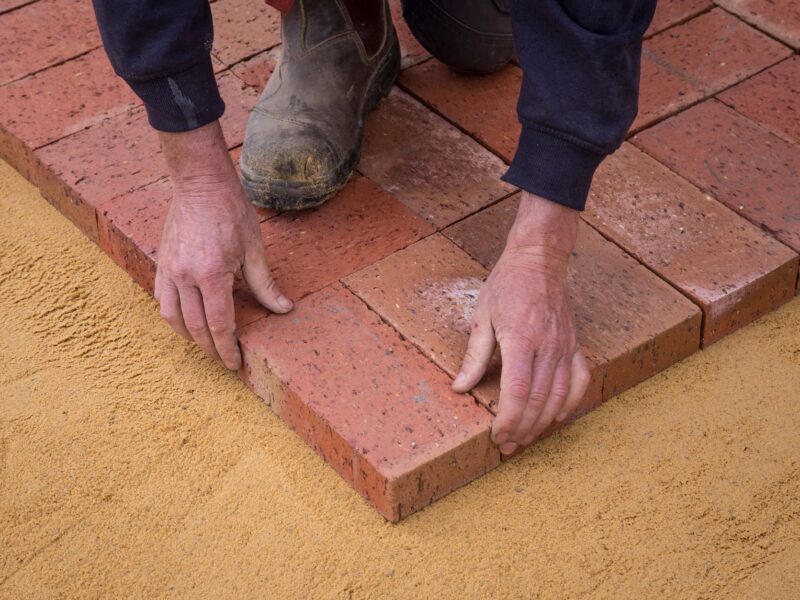
How to Keep Weeds Out of Paver Joints
Weeds and ants in paver joints come from loose sand and trapped moisture. How New Orleans homeowners keep…
Read more
Paver Walkways and Front Path Design in New Orleans
A front walk in the New Orleans metro takes constant foot traffic, live oak roots, and standing water.…
Read more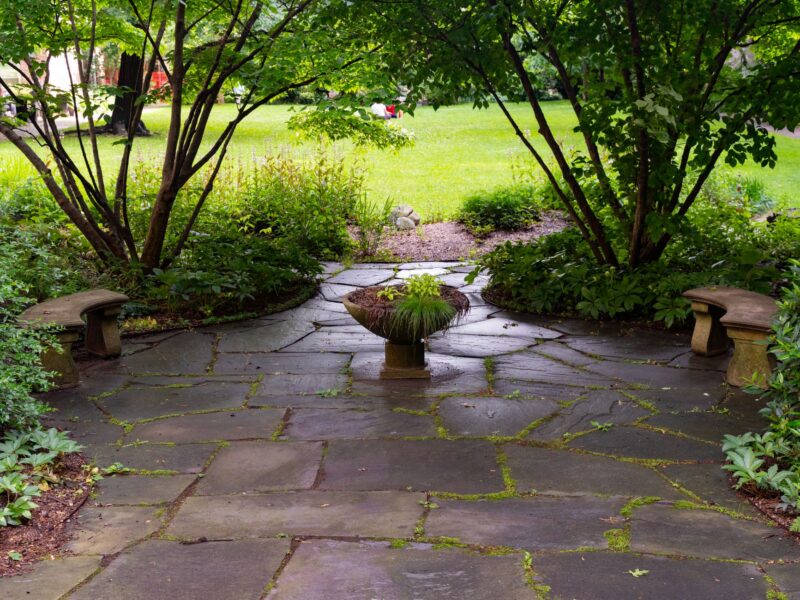
Building Hurricane-Resistant Hardscape on the Gulf Coast
From June to November, New Orleans hardscape has to handle wind-driven rain and standing water. Permeable pavers, a…
Read more