

Maintenance
Checking Your Pavers After a Storm or High Water in Slidell
After a tropical storm or high water in Slidell, how to spot washed-out joint sand and undermined edges in pavers before a small dip spreads.
Written by Big Easy Paver Patios
Key Takeaways
- After a storm or high water in Slidell, wait for the water to drain and put safety first. The CDC warns that floodwater can carry waste and hazardous debris.
- Pavers after flooding usually show trouble in the joints and at the edges first, with washed-out joint sand and border pavers that drift.
- Surface silt and a little lost joint sand are cleanup and re-sanding. Pavers that rock or sink point to base damage.
- If you hire help, check the company on the Louisiana State Licensing Board for Contractors search before you sign or pay.
- Need your pavers checked in Slidell? Call Big Easy Paver Patios at (504) 688-4244.
What Should You Check First on Pavers After Flooding in Slidell?
Quick Answer: Start with safety, then work from the joints outward. Once the water has drained, look for joint sand that washed out and edge pavers that shifted. Then look for spots that now sit lower than before or hold water. Checking pavers after flooding in Slidell mostly takes a broom and a long straightedge. A small amount of lost sand is routine to fix. Movement in the pavers themselves means water reached the base, and that needs attention before the next storm.
How Do You Stay Safe Before Checking Your Pavers?
Floodwater isn’t clean water. The CDC’s floodwater safety page says it can contain human and livestock waste, hazardous household and industrial waste, downed power lines, and debris like lumber and vehicles. Its advice if you must enter floodwater is to “wear rubber boots, rubber gloves, and goggles,” and to wash any skin that touched it with soap and clean water as soon as possible.
Wait until the water is fully gone before you walk the hardscape, and stay clear of any downed lines near the yard. Silt left on pavers came from that same water, so wear gloves when you clean it off.
Which Paver Problems Show Up After a Storm?
Walk the whole area slowly once it’s dry. Here’s what to look for:
- Empty joints. Joint sand locks pavers together. When heavy rain or moving water washes it out, the pavers can start to shift.
- Edges that moved. If edge restraint failed or water undercut the border, edge pavers drift outward and gaps open along the perimeter.
- New low spots. Water standing where it used to drain means the base under that spot may have washed out.
- Loose pavers. A paver that moves underfoot has lost support below it.
- Steps and stoops. Settlement shows up at steps early, and a tilted step is a trip hazard. See paver steps and stoops for raised homes.
- Drains and downspouts. A clogged channel drain or a blocked downspout will send the next storm’s water under the pavers.
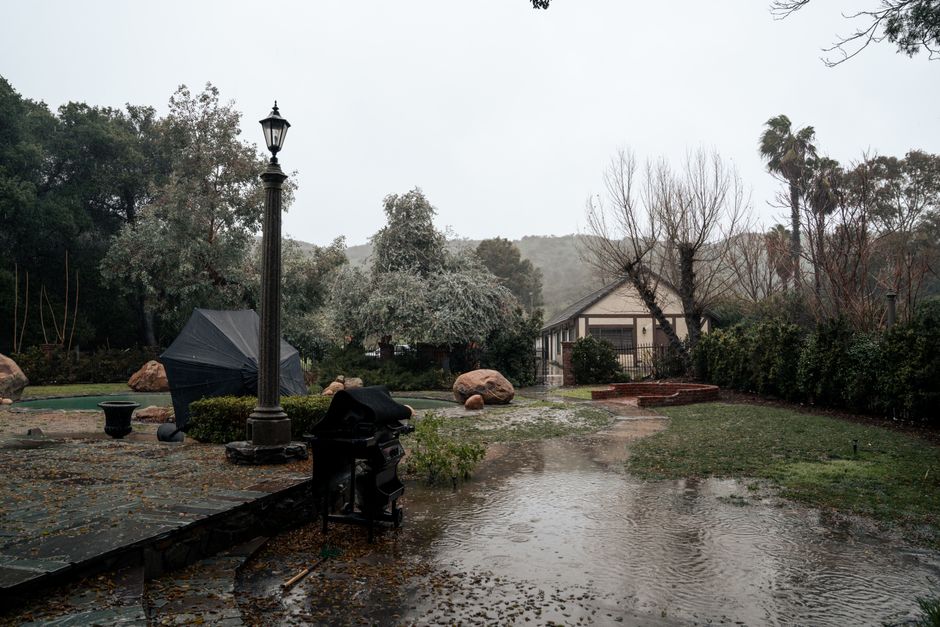
Where on a Slidell Lot Should You Look Twice?
Some spots take more water than others during a storm, so give them extra time:
- Low corners of the yard. Water collects there first and drains last, so the base underneath stays wet the longest.
- Where pavers meet lawn or planting beds. Soil and mulch can wash onto the surface, and water can undercut the edge from the soft side.
- Near downspouts. Concentrated roof runoff can wash base material out from under a patio edge.
- The driveway apron. Water headed for the street crosses it, so check the joint where the driveway meets the apron.
- Pool deck edges. Look where the deck meets the coping and where it meets the yard.
Why Does Washed-Out Joint Sand Matter So Much?
A paver surface holds together through interlock: the sand in each joint keeps units from sliding against their neighbors. Lose enough of it and one paver moves, then the pavers around it follow. Refilling joints soon after a storm is the cheapest repair on this list.
Timing matters. Joint sand goes in best on a dry surface, which can take patience in a humid Slidell September. Our post on keeping weeds out of paver joints covers polymeric sand, and how to seal pavers in the New Orleans climate explains why sealing waits for things to dry out.
When Is It Cleanup, and When Is It Releveling?
Usually cleanup: silt on the surface and a little lost joint sand. Sweep and rinse, then re-sand once the surface dries. Go easy with a pressure washer, since a close, hard spray can blow sand out of the joints you’re trying to keep.
Usually releveling: dips, pavers that move underfoot, edges that separated, or a step that now tilts. Those are base problems. The fix is to lift the affected pavers and correct the base, along with whatever washed it out, then reset the same units. Our post on why pavers settle in New Orleans walks through that process, and our paver repair and releveling in Slidell handles it locally.
How Should You Hire Help After a Storm in Slidell?
Storms bring a rush of repair offers. A few steps protect you:
- Check the license. The LSLBC website lets you search for a company by name, license number, city, or parish.
- Know the threshold. Louisiana’s licensing law applies to home improvement work starting at a $7,500 project value and exempts some kinds of work, so ask which license or registration covers your job.
- Get it in writing. A written scope should name the cause of the damage along with the fix.
- Ask about permits. Inside Slidell city limits, ask the city whether your repair needs a permit. Outside them, ask St. Tammany Parish.
Our guide on how to choose a paver installer has a fuller question list. It’s written for Kenner and Metairie, and the questions work the same way in Slidell.
How Do You Get Pavers Ready for the Next Storm?
- Clear channel drains, and keep downspouts pointed away from the hardscape.
- Refill joints once everything dries out.
- Fix loose edge restraint before the border starts to drift.
- Know your flood zone. Our post on flood zones and fill rules in St. Tammany Parish shows how to look it up.
Walk the hardscape again a week or two after the storm, since a void under the base can take a few rains to show at the surface. If you’re planning new hardscape with storms in mind, see building hurricane-resistant hardscape.
Frequently Asked Questions
Should I pressure wash pavers after floodwater?
A gentle rinse and a broom handle most silt. A hard, close spray can strip joint sand, so keep the nozzle back and plan to re-sand afterward. Wear gloves, since the silt came from floodwater.
Can I refill the joints myself?
If the pavers are still level and tight, you can usually refill the joints yourself once the surface is completely dry. If pavers rock or sit low, the base needs work first.
How soon should settled pavers be fixed?
Before the next heavy rain if you can. Water keeps moving through the same weak spot, so a small dip tends to grow.
Does my driveway need the same check?
Yes, with extra attention to the wheel tracks and the apron. Our page on paver driveways in Slidell covers driveway work there.
Get Your Pavers Checked in Slidell
We’ll look at the joints and edges, then tell you whether it’s cleanup or base repair.
See our drainage and grading in Slidell and the Slidell service area page, or call (504) 688-4244 for a free estimate.
Keep reading
More from the blog

Driveway Permits in Jefferson Parish: Metairie, Old Jefferson, and Kenner
Replacing a driveway in Metairie, Old Jefferson, or River Ridge? How Jefferson Parish permit and apron rules compare…
Read more
Building Hurricane-Resistant Hardscape on the Gulf Coast
From June to November, New Orleans hardscape has to handle wind-driven rain and standing water. Permeable pavers, a…
Read more
Backyard Patio Ideas for New Orleans Homes
Patio ideas that suit small metro lots, shaded oak yards and flood-prone ground. Layout, material and drainage ideas…
Read more