
Cost & Planning
Pavers or Poured Concrete: Which Is Cheaper for a Metairie Patio?
A plain poured slab usually costs less than a paver patio, but a stamped one can come close. Here's how the finishes compare and how to read a Metairie patio bid.
Written by Big Easy Paver Patios
Key Takeaways
- A plain poured slab usually has a lower starting price than a paver patio. A stamped slab starts just under concrete pavers, and their price ranges overlap.
- At 1,000 square feet, a patio means roughly 2,700 to 4,500 pavers, or about 12.3 to 18.5 cubic yards of concrete.
- Patio prices don’t carry over from driveway prices, since a patio holds furniture and foot traffic instead of cars.
- In Metairie, compare bids only after both cover the same footprint, the same finish, and the same plan for rain.
- Comparing patio bids in Metairie? Call Big Easy Paver Patios at (504) 688-4244.
Is It Cheaper to Put Down Pavers or Pour Concrete for a Patio?
Quick Answer: Pouring a plain slab is usually cheaper than putting down pavers. LawnStarter’s 2026 patio cost guide lists a smooth or brushed slab at $4 to $9 per square foot installed and concrete pavers at $8.70 to $16.70. Bob Vila’s 2023 guide lists a broom-finished patio at $4 to $7 and concrete pavers at $8 to $15. Those are national market ranges, not quotes. The catch is the finish, because decorative work can bring a slab close to paver pricing.
That’s the install price on a Metairie patio, and it’s the question this post sticks to. We’ve covered three neighboring questions elsewhere. If you want to know which surface holds up better on soft ground, read our comparison of pavers and concrete for patios. For the same choice under vehicles, see whether a paver driveway is cheaper than concrete. And if you’re open to any surface at all, our post on the cheapest hardscape for a yard takes up that wider question.
Which Patio Finishes Cost the Least?
“Concrete” and “pavers” each cover a range of products, so the fair comparison is finish against finish. Here’s the order LawnStarter’s 2026 guide gives, by starting price, with its installed ranges per square foot. Its ranges overlap, so a list like this shows where each option begins, and a real bid can land above the next item down:
- Smooth or brushed slab. $4 to $9, the lowest-priced poured option.
- Colored, stained, or acid-finished slab. $5.50 to $12.50.
- Stamped slab. $8 to $16. Bob Vila’s 2023 guide lists stamped patios lower, at $5 to $15.
- Concrete pavers. $8.70 to $16.70, the usual entry point for a paver patio.
- Flagstone, brick, and natural stone pavers. $13.65 to $31.65 for flagstone, $14 to $24 for brick, and $15 to $31 for natural stone.
So “concrete is cheaper” holds for the plain gray slab. A homeowner who wants a patterned look from concrete should put a stamped price next to a paver price before deciding, since that’s where the two are closest. Bob Vila’s 2023 guide also notes that added finishes can bring concrete close to paver pricing.
We’d also separate the surface from the extras. Our paver patio cost guide lists seat walls, steps, and fire features as add-ons with their own material and labor, and those can be bid with either surface. If one quote includes them and the other doesn’t, the comparison between surfaces is off before you’ve read a single line of it.
What Quantities Go Into a 1,000 Sq Ft Patio Quote?
Multiply LawnStarter’s 2026 ranges by 1,000 square feet and you get about $8,700 to $16,700 for concrete pavers, $4,000 to $9,000 for a plain slab, and $8,000 to $16,000 for a stamped slab. Those are national ranges multiplied out, not a price for your yard. The arithmetic below sits behind any quote, so you can check that a bid describes the job you asked for.
The Paver Side
- Paver count. A 4×8 paver covers 32 square inches, or about 4.5 pavers for each square foot, so about 4,500 pieces. A 6×9 paver works out to about 2,700.
- Stone. Every inch of base across 1,000 square feet is about 3.1 cubic yards.
- Bedding. A 1-inch layer is another 3.1 cubic yards or so.
- Edge. A 25×40 patio has 130 feet of perimeter, minus whatever runs along the house.
The Slab Side
The patio guide lists slabs at 4 to 6 inches thick. At 1,000 square feet, that’s about 12.3 cubic yards of concrete at 4 inches and about 18.5 at 6 inches, a difference of about 6.2 cubic yards. If two slab bids don’t name a thickness, you can’t compare them. The guide also says greater thickness pushes the cost toward the upper end of each range.
The paver size matters more than people expect. Going from a 6×9 to a 4×8 paver adds about 1,800 pieces over the same patio, which is worth raising when a bidder recommends one. Ask which size each number assumes. Only a written estimate for your own yard can turn these ranges into a real number.

Why Doesn’t a Driveway Price Tell You What a Patio Costs?
Because the two jobs carry different loads. A patio carries foot traffic and furniture. A driveway carries vehicles, which is why our guides treat it as a deeper base with thicker pavers. If a neighbor’s driveway price is your only reference, it probably won’t match a patio of the same size in either material.
Patios bring their own questions, and these are the ones we’d raise on a Metairie lot:
- The back door. A patio has to meet the house at a sensible height. A raised door may need a landing or steps, and those belong in the bid. See our paver steps and stoops in Metairie.
- The shape. Curves and tight borders mean more cut pavers. A patio often has more of them than a driveway, simply because it’s designed around a yard.
- Future phases. A grill pad or a side path added later has to match. Our post on what hardscaping is covers how to plan phases.
- The look you’re paying for. A plain slab is the low price only if a plain slab is what you want. Price the patio you’d actually be happy sitting on.
What Should You Ask When Comparing Patio Bids in Metairie?
A good comparison starts with matching the scope. Two bids are only comparable once they cover the same footprint and the same finish level, so give both bidders the same measurements. Then ask each one to put these on separate lines:
- The paver size or the slab thickness
- The base material and its depth
- Edge restraint or forms
- Any steps, seat walls, or borders
- Where rain goes after it leaves the patio
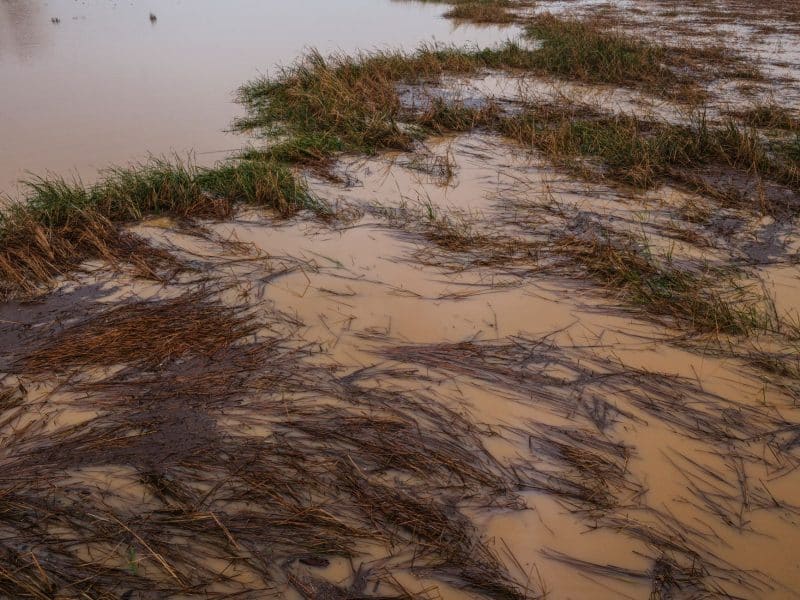
That last line matters here. Metairie lots are flat, and summer storms in Jefferson Parish can leave a yard holding water, so a patio of either material has to send rain somewhere. If one bid plans for that and the other doesn’t, they aren’t the same job. Our drainage and grading in Metairie page explains that work.
Much of Metairie also sits on soft fill, so ask each bidder to state a base depth in writing. If the depths differ, ask why. In our view, a straight answer to that question tells you more about a bid than the total at the bottom does.
Do You Need a Permit for a Patio in Metairie?
Jefferson Parish’s permit page says non-structural paving on private property generally doesn’t need a building permit, and it notes that some zoning districts review paving. Some parts of Metairie also carry extra applications or approvals, so check with Jefferson Parish before you budget.
Frequently Asked Questions
Is a 4-inch slab or a 6-inch slab cheaper?
A thinner slab uses less concrete. Thickness should come from what the job needs, so don’t choose it on price alone.
Does a stamped slab cost the same as pavers?
It can come close. LawnStarter’s 2026 ranges are $8 to $16 for a stamped slab and $8.70 to $16.70 for concrete pavers, so local bids for your patio will settle it.
Should I price both before deciding?
If you’re torn, yes. Asking for both on the same measurements is the most reliable way to see the real gap on your own lot.
Price a Patio Both Ways in Metairie
Tell us the size you have in mind, and we’ll walk the yard and give you a free written estimate. See our paver patios in Metairie, start with the Metairie service area page, or call (504) 688-4244.