

Cost & Planning
Crushed Stone or Pavers for a Driveway in Mandeville and Covington
Weighing a crushed stone drive against pavers in Mandeville or Covington? How the two compare for ruts, runoff, upkeep, and long-term cost.
Written by Big Easy Paver Patios
Key Takeaways
- A crushed stone driveway usually costs less to put down and asks for more upkeep. A paver driveway costs more up front and stays in place with less attention.
- On low Northshore lots, loose stone ruts where tires track and drifts where water runs, so it needs regular raking and topping up.
- Either surface depends on its base and drainage, and neither one fixes a driveway that sits in water.
- Along a parish road, a driveway culvert goes through St. Tammany Parish engineering, whose requirements include a 15-inch minimum culvert size. Inside Mandeville, the city has its own right-of-way and culvert permit.
- Weighing a driveway in Mandeville or Covington? Call Big Easy Paver Patios at (504) 688-4244.
Gravel vs Paver Driveway in Mandeville: Which Holds Up Better?
Quick Answer: For a driveway that gets daily use, pavers usually hold up better, and crushed stone usually costs less to install. In the gravel vs paver driveway choice in Mandeville, the deciding factors are how much upkeep you’ll accept and how wet your lot gets. Crushed stone moves under tires and in heavy rain, and ruts form in the wheel tracks. Pavers lock together over a compacted base and can be lifted and reset where the ground settles. Both surfaces need a good base and a plan for the water.
How Does a Crushed Stone Driveway Behave on a Northshore Lot?
Crushed stone has real advantages. It goes down quickly, and most repairs are a matter of adding stone. It also has habits every owner learns:
- Ruts and potholes. Tires push stone out of the wheel tracks, and water collects in the low spots that follow.
- Migration. Stone drifts onto the lawn and out toward the street.
- Weeds. Seeds settle into the fines between stones, especially along the edges.
- Loose material in storms. The Vieux Carré Commission in New Orleans recommends avoiding gravel and other loose, small-scale paving in the French Quarter because it can become airborne in a wind storm. That guideline is written for the Quarter, but we’d keep the same concern in mind for loose stone near a house during storm season.
- Regular upkeep. Raking and topping up stone are part of owning it.
How Does a Paver Driveway Compare?
A paver driveway is a field of individual units over a compacted aggregate base, locked in by edge restraint and joint sand. Tires don’t push it around, and it doesn’t wander into the lawn. When the ground under one area settles, those pavers can come up for a base repair and then go back down. Our paver driveway cost guide explains why most of that job is the base, and herringbone vs running bond covers pattern choice for vehicle traffic.
Iowa State University Extension notes that flexible materials such as concrete pavers and bricks accommodate tree root growth better than rigid concrete, which helps on lots with big trees near the drive. They won’t stop roots from lifting the surface, but the extension says they give a smoother transition over displaced areas.
Which Handles Water and Runoff Better?
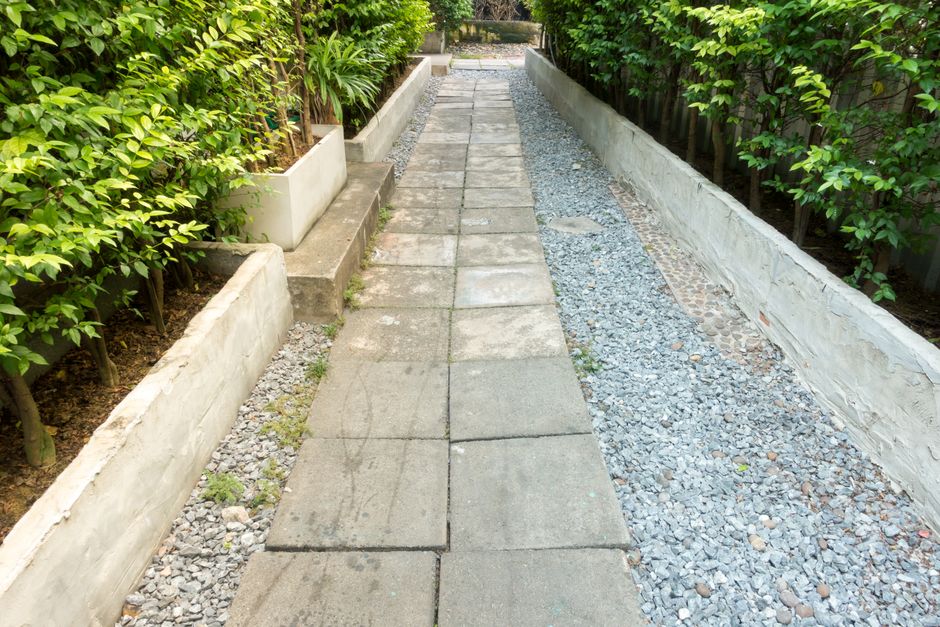
Neither surface fixes a driveway that sits in water. Crushed stone packed hard by traffic lets less water through than a loose bed, and a standard paver driveway sheds most rain unless it’s built as a permeable system with open joints and an open-graded base. Our guide to permeable pavers for flood-prone homes explains how those systems work.
If lot coverage or drainage limits apply to your property, ask the City of Mandeville or St. Tammany Parish how your planned surface counts before you choose. We won’t guess at that here, because it depends on the rule that covers your lot. For the site side, see drainage and grading in Mandeville and our post on flood zones and fill rules in St. Tammany Parish.
What Are the Culvert and Ditch Rules for a St. Tammany Driveway?
When a driveway crosses a roadside ditch, that crossing is where most of the rules live.
- Parish driveway approval. St. Tammany Parish’s Code of Ordinances, Sec. 35-7, says that wherever a culvert is installed or a driveway is built between private property and a parish owned or maintained road, the driveway application goes to the department of engineering. That department checks that the driveway meets roadway and traffic safety standards and the existing drainage requirements for the area.
- Culvert size and type. The parish engineering department’s culvert requirements sheet, revised June 2025, calls for a LADOTD-approved culvert sized to handle a 10-year storm event and never smaller than 15 inches.
- Who pays. The same sheet says the property owner is responsible for all work and costs, and it asks owners to contact the department before culvert work starts.
- Changes later. Sec. 35-7 also says a driveway on the right-of-way can’t be relocated or have its dimensions altered without written permission from the department of engineering.
- Inside Mandeville. The city’s permit forms include a Right of Way Use/Culvert Permit.
Sec. 35-7 also limits entrances onto parish roads: generally no more than two combined entrances and exits for a parcel with less than 200 feet of frontage, and only one when frontage is 50 feet or less. If you’re thinking about a second curb cut for a circle drive, check that rule first.
What Moves the Long-Term Cost of Each Driveway?
We won’t quote dollar figures here, because both surfaces depend on the length of the drive and what’s under it. These are the drivers:
- Base and excavation. Both need a compacted base. Pavers need a deeper, more exact one.
- The culvert. A culvert under the driveway adds a pipe and parish review no matter which surface sits on top.
- Upkeep. Stone needs raking and fresh stone over the years. Pavers need joint sand and the occasional spot releveling.
- Repairs. Stone repairs are quick but come around often. Paver repairs come around less often and reuse the same units.
If your current drive is broken concrete instead of stone, our guide on whether to resurface or replace cracked concrete covers that decision.
Is There a Middle Ground Between Stone and Pavers?
Yes. One option is pavers where the wear is heaviest, such as a parking pad near the house, with crushed stone on the longer run. Paver borders along a stone drive can also help hold the stone in place. Plan the transitions carefully, because loose stone tends to get tracked onto the pavers.
Frequently Asked Questions
Is a gravel driveway cheaper than pavers in Mandeville?
Crushed stone usually costs less to install. Upkeep adds to its cost over the years, and the base and any culvert work affect both surfaces. We won’t give a number without seeing the site.
Do I need a culvert for my driveway?
If the driveway crosses a roadside ditch, ask the St. Tammany Parish engineering department, or the City of Mandeville if you’re inside city limits, what the crossing needs. Where a culvert goes in, the parish requirements sheet sets a 15-inch minimum and asks you to contact the department before the work.
Will pavers flood less than gravel?
The surface alone won’t decide that. Grading and where water leaves the lot matter more. Permeable pavers can let some rain soak in where the soil allows.
Can I put pavers over an existing gravel driveway?
The old stone can sometimes become part of a new base, but the base still has to be built to depth and compacted properly. A site visit tells you how much of it is usable.
Plan a Driveway in Mandeville or Covington
We’ll walk the drive and check the ditch, then give you a free written estimate.
See our paver driveways in Mandeville and paver driveways in Covington. Start with the Mandeville service area page, or call (504) 688-4244.
Keep reading
More from the blog

How to Choose a Paver Installer in Kenner and Metairie
Hiring for a patio or driveway in Kenner or Metairie? The license checks, base questions, and quote details…
Read more
The Best Pavers for the Louisiana Climate
The best pavers for the Louisiana climate: dense concrete, fired clay brick, and porcelain, picked for New Orleans…
Read more
What a Paver Patio Costs in New Orleans (2026 Guide)
What drives the cost of a paver patio in New Orleans, from size and paver type to base…
Read more