
Local & Climate
Pergola vs Gazebo vs Pavilion: Which Is Right for Your New Orleans Backyard?
Compare pergolas, gazebos, and pavilions for New Orleans backyards. Learn how each handles Louisiana heat, humidity, and storms so you pick the right structure.
Spending time outdoors in New Orleans is one of life’s genuine pleasures, until the August heat index hits 105 degrees or a pop-up thunderstorm rolls in off Lake Pontchartrain. The right overhead structure changes everything. It gives you shade for lazy Sunday afternoons, shelter during a sudden shower, and a defined space that makes your backyard feel intentional rather than empty.
Three structures dominate the conversation: pergolas, gazebos, and pavilions. They look similar in a quick online search, but they behave very differently in real life. Choosing the wrong one for your lot size, budget, or lifestyle is a costly mistake. This guide breaks down the real differences, compares costs, and helps you decide which structure fits your New Orleans home.
What Is a Pergola?
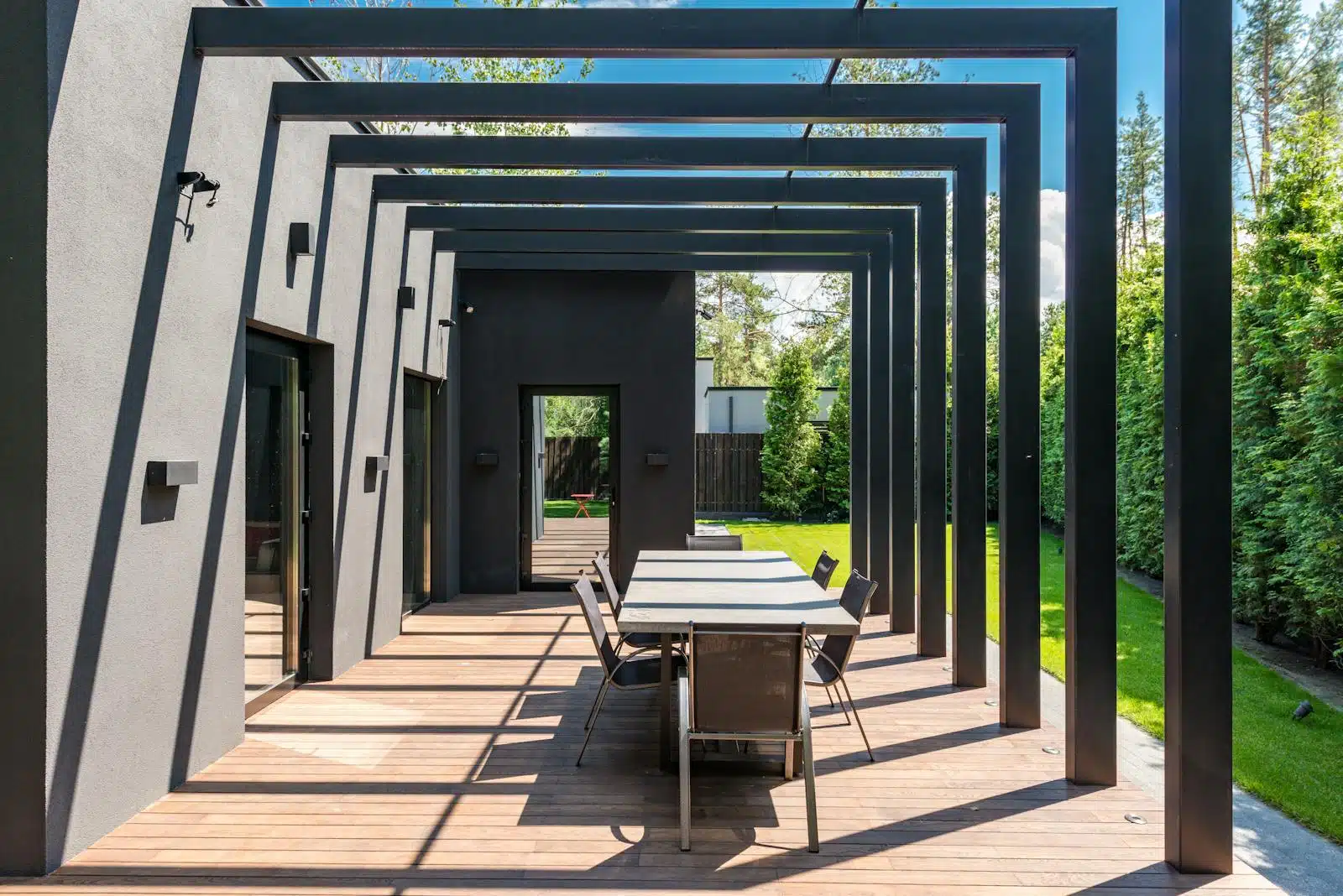
A pergola is an open overhead structure built from vertical posts and horizontal beams, topped with an open lattice or spaced rafters. The defining feature is the roof: it does not fully cover the space underneath. Sunlight filters through the gaps, and so does rain.
That open roof is also the pergola’s biggest design strength. You can train climbing vines across the beams, hang string lights through the lattice, or add a retractable canopy for adjustable shade. Pergolas feel architectural. They create the sense of a room outdoors without enclosing it, making them a popular anchor for patio furniture, dining areas, or outdoor kitchens.
Best for: Homeowners who want structure and style but prefer an open, airy feel. Pergolas also tend to carry the lowest base cost of the three options.
What Is a Gazebo?
A gazebo is a freestanding, fully roofed structure with open sides, sometimes screened. The roof is its signature: solid, peaked, and designed to keep rain and direct sun completely out. Traditional gazebos have a hexagonal or octagonal footprint, though rectangular models are common today.
Because the roof is solid, a gazebo creates genuine shelter. You can use it through a rainstorm. The open sides let airflow through, which matters enormously in a city where summer humidity rarely drops below 70 percent. Gazebos are popular for backyard entertaining spaces, hot tub enclosures, and covered seating areas.
Best for: Homeowners who want protection from the elements without sacrificing open airflow. A gazebo is a good middle ground between a bare patio and a fully enclosed screened porch.
What Is a Pavilion?
A pavilion is a larger, typically rectangular structure with a solid roof and fully open sides. Think of it as a gazebo scaled up: the roof is sturdy enough to handle heavy rain, the footprint is generous enough for a full outdoor dining setup or an outdoor kitchen beneath it, and there are no walls to limit airflow.
The distinction between a gazebo and a pavilion often comes down to size and roof style. Pavilions usually have gabled or shed-style roofs rather than the peaked, multi-sided roof of a gazebo, and they are engineered for larger entertaining spaces rather than intimate seating areas.
Best for: Homeowners who entertain regularly, want to cover an outdoor kitchen, or need a structure that can handle a crowd. Pavilions offer the most covered square footage per dollar among the three.
Pergola vs Gazebo vs Pavilion: Key Differences at a Glance
| Feature | Pergola | Gazebo | Pavilion |
|---|---|---|---|
| Roof | Open lattice or partial | Solid, peaked | Solid, gabled |
| Rain protection | Minimal without canopy | Full | Full |
| Airflow | Excellent | Good | Excellent |
| Footprint shape | Flexible | Round or hexagonal | Rectangular |
| Typical size | Small to large | Small to medium | Medium to large |
| Best use | Patio anchor, dining, garden | Intimate seating, hot tub | Outdoor kitchen, large entertaining |
| Relative cost | $ | $$ | $$-$$$ |
How New Orleans Climate Should Factor Into Your Choice
New Orleans is not a forgiving climate for outdoor structures. Heat, humidity, heavy rainfall, and the possibility of tropical storms all need to be part of your planning conversation. Here is how each structure holds up:
Rain. New Orleans averages over 60 inches of rain per year, more than Seattle. A standard pergola with an open roof offers little protection during the heavy afternoon downpours that arrive almost daily from June through September. If you want to use your outdoor space through a summer storm, a gazebo or pavilion is the practical choice. Bioclimatic pergola systems with adjustable louvers offer a middle path: close the roof when rain starts, open it when the sky clears.
Heat and humidity. Shade matters more here than almost anywhere else in the country. All three structures provide shade, but a solid-roofed gazebo or pavilion blocks radiant heat more completely than an open pergola lattice. If your backyard faces south or west and gets direct afternoon sun, the enclosed roof makes a measurable difference in comfort.
Wind and storms. Any permanent outdoor structure should be engineered and installed to local wind-load standards. A professionally installed structure, properly anchored and built with materials suited for coastal humidity, will hold up where a kit assembly may not.
Wood vs aluminum. Traditional wood structures require ongoing maintenance in New Orleans’ climate: staining, sealing, and watching for moisture damage. Aluminum structures, including modern bioclimatic pergola systems, resist rust and humidity without the annual upkeep. Big Easy Paver Patios offers aluminum solutions specifically engineered for outdoor durability in this climate.
Cost Comparison: Pergola vs Gazebo vs Pavilion
Costs vary widely based on size, materials, and the complexity of your site. The ranges below reflect general market averages for professionally installed structures, not big-box kit prices, which do not account for engineering, anchoring, or local code compliance.
- Pergola: $3,000 to $15,000 or more for a professionally installed wood or aluminum pergola. Bioclimatic systems with adjustable louvers sit at the higher end.
- Gazebo: $5,000 to $20,000 or more installed, depending on size and roofing material.
- Pavilion: $8,000 to $30,000 or more for a large pavilion with a solid roof, especially when combined with an outdoor kitchen setup.
These are general reference ranges. Your actual cost will depend on your lot, the structure size, material choices, and whether you are integrating it with a patio or deck. The best way to get an accurate number is a free, on-site estimate from a contractor who knows New Orleans.
Which One Is Right for Your New Orleans Backyard?
Do you want to use the space in the rain? If yes, go with a gazebo or pavilion. A standard pergola will leave you watching the party move inside.
Is airflow your top priority? All three options move air well, but pavilions and pergolas keep the sides fully open. Gazebos sometimes feature screens or decorative railings that reduce airflow slightly.
How much space do you have? Pergolas are the most flexible, anchoring as small as a dining table footprint. Pavilions need room to breathe. Gazebos fit well in mid-size yards.
Are you building around an outdoor kitchen? A pavilion or a solid-roofed structure is the right choice when there is a grill or cooking setup underneath. You want smoke to vent easily and the roof to handle grease and heat safely.
Do you want something you can close up in a storm? Bioclimatic pergola systems with motorized, adjustable louvers function as an open pergola in good weather and close into a near-solid roof when it rains. Big Easy Paver Patios installs several bioclimatic pergola systems in the New Orleans area, including options from the B-Cube line.
For homeowners across the metro, from Metairie to Mandeville, the best structure is the one that matches how you actually live, not just how the photos look online.
Ready to Build? Get a Free Estimate
Big Easy Paver Patios has been helping New Orleans homeowners build outdoor spaces worth using for over 30 years. Whether you are leaning toward a pergola, a gazebo, a pavilion, or something in between, the team can walk your property, talk through your options, and give you a clear, no-obligation estimate.
Explore our Pergolas and Gazebos and Pavilions service pages to see what is available, then contact us online or call 504-688-4244 to schedule your free estimate. We serve New Orleans and surrounding communities, including Kenner, Slidell, and Hammond.
Frequently Asked Questions
What is the main difference between a pergola and a gazebo?
A pergola has an open, latticed roof that allows light and rain through. A gazebo has a solid, peaked roof that provides full protection from rain and direct sun. Gazebos are better for complete weather protection; pergolas are better for an airy, open feel.
Which is cheaper, a pergola or a gazebo?
Pergolas generally cost less to install than gazebos at comparable sizes. Adding a retractable canopy or a bioclimatic louver system can bring the cost in line with a gazebo or higher, depending on the system.
Is a pavilion just a big gazebo?
They are similar but not the same. Pavilions typically have rectangular footprints and gabled roofs suited for larger entertaining spaces. Gazebos are usually hexagonal or octagonal with peaked roofs, designed for smaller, intimate settings.
Which outdoor structure holds up best in New Orleans humidity and rain?
Aluminum structures resist humidity and corrosion better than untreated wood. For rain protection, a gazebo or pavilion with a solid roof provides the most coverage. Bioclimatic pergola systems with adjustable louvers offer the best of both worlds.
Do I need a permit to build a pergola or gazebo in New Orleans?
Most permanent outdoor structures require a building permit in New Orleans and surrounding parishes. Requirements vary by city and structure size. A licensed local contractor handles the permitting process as part of the installation.
Keep reading
More from the blog
Paver Pool Decks: Cooler, Safer, and Slip-Resistant
Pavers beat poured concrete around New Orleans pools: cooler underfoot, grippy when wet, fast to drain, and easy…
Read more
Paver Walkways and Front Path Design in New Orleans
A front walk in the New Orleans metro takes constant foot traffic, live oak roots, and standing water.…
Read more
New Orleans Courtyard Ideas That Work With Our Climate
The best New Orleans courtyard ideas start with brick pavers, real drainage, and shade built for our humidity.…
Read more