

Local & Climate
Paving a Courtyard in the French Quarter and Other New Orleans Historic Districts
Brick or flagstone courtyard in the French Quarter or another New Orleans historic district? What VCC or HDLC review can involve and how to plan drainage.
Written by Big Easy Paver Patios
Key Takeaways
- Historic district courtyard paving in New Orleans goes through one of two bodies: the Vieux Carré Commission in the French Quarter, or the Historic District Landmarks Commission in the city’s other local historic districts.
- The VCC’s design guidelines say it has jurisdiction over all paving on private property, and they don’t allow concrete pavers or stamped concrete except possibly at new construction.
- In HDLC districts, review covers what’s visible from the public right-of-way, and full control districts send all exterior work except paint color and plantings to the HDLC first.
- Drainage is part of it too. The VCC requires keeping historic paved drainage channels, and city rules bar changes that increase runoff onto a neighbor’s property.
- Planning a courtyard in the Quarter or a historic neighborhood? Call Big Easy Paver Patios at (504) 688-4244.
Who Reviews Historic District Courtyard Paving in New Orleans?
Quick Answer: It depends on the district. In the French Quarter, the Vieux Carré Commission (VCC) reviews it. The VCC’s Guidelines for Site Elements and Courtyards say the commission has jurisdiction over all paving on private property, and that, apart from plantings and furniture one person can easily move, it regulates all aspects of a proposed change to a courtyard, carriageway, passageway, or side yard. Outside the Quarter, the city’s other local historic districts fall under the Historic District Landmarks Commission (HDLC), whose review centers on what can be seen from the public right-of-way. Either way, historic district courtyard paving in New Orleans needs that review settled before anyone lifts a brick.
The VCC guidelines also say all applicants must get a VCC permit, along with any other necessary city permits, before proceeding with work. This post is general information, and the commissions and city offices have the final word on any property.
What Does the Vieux Carré Commission Require for Courtyard Paving?
The paving guide in the VCC’s site elements chapter spells out what the commission requires and what it recommends, then lists what it doesn’t allow.
The VCC requires:
- replacing existing brick or stone paving in kind, so the new work matches what’s there in material and in a pattern appropriate to the building type and construction period
- retaining historic paved drainage channels unless they impede safe access along a pedestrian way
The VCC recommends:
- minimizing the amount of paving on a site
- using traditional stone or brick for new paving, with mortar suited to the masonry’s hardness so too-hard joints don’t form ridges
- flagstone 1-1/2 to 2 inches thick, since thinner slabs tend to crack
- avoiding gravel or other loose, small-scale paving that can become airborne in a wind storm
- a simple steel-troweled finish where concrete is used, with its design and color subject to VCC review
The VCC does not allow:
- asphalt paving at any location
- stamped concrete paving or concrete pavers, except with the possible exception of new construction
- a parking area in the front yard of a building

Can You Use Concrete Pavers in a French Quarter Courtyard?
Under those guidelines, generally no. Concrete pavers and stamped concrete aren’t allowed, with a possible exception for new construction. Traditional brick or stone is the usual starting point, though the guidelines also describe a simple steel-troweled concrete finish subject to review, and they say each application for a nontraditional paving material is taken on a case by case basis. They also point out that many sidewalks in the French Quarter are brick laid in a herringbone pattern, and they ask that existing brick or stone be replaced in kind.
We’d rather tell you that up front than sell you a paver the commission won’t approve. For brick and stone courtyards, see our courtyard paving in New Orleans, and for pattern background, our post on herringbone vs running bond. Design ideas that suit the climate are in New Orleans courtyard ideas.
How Does HDLC Review Work Outside the French Quarter?
The HDLC’s guidelines introduction says every local historic district in New Orleans except the Vieux Carré falls under the HDLC, and that the City Council designates each district as either full control or partial control.
- Full control districts. The HDLC has jurisdiction over any part of a building or property visible from a public right-of-way. All exterior work other than paint color and plantings must be submitted for review and approval before work starts.
- Partial control districts. Review is narrower and varies by district. Depending on the district, it can cover demolition, demolition by neglect, new construction, or review and comment on visible exterior changes.
The guidelines add that within local historic districts, HDLC jurisdiction is limited to areas of a property visible from a public right-of-way, such as a sidewalk or an alley, not counting plantings. A walled rear courtyard that nobody can see may fall outside that. An alley view counts, though, so confirm with the HDLC before you assume.
The district chart in those guidelines, based on 2017 building totals and marked subject to change, lists Bywater, Faubourg Marigny, Holy Cross, and the Irish Channel as full control districts. It shows Uptown and Mid-City as partial control districts where review covers demolition. Check the HDLC’s current information for your address.
What City Rules Apply on Top of Historic Review?
The VCC chapter lists City of New Orleans requirements that apply to paving in addition to commission review:
- The Comprehensive Zoning Ordinance sets the allowable paving on a parcel, and the guidelines suggest contacting the City Planning Commission or the Department of Safety and Permits about it before applying to the VCC.
- A property owner is required to maintain the public sidewalk and not impinge on pedestrian path requirements.
- A property owner isn’t allowed to change the drainage pattern of their property in a way that increases stormwater runoff to a neighboring property.
- Questions about street trees go to the Department of Parks and Parkways.
Our post on patio permits in New Orleans covers the broader permit picture.
How Do You Plan Drainage for a Historic Courtyard?
Old courtyards were built to move water, and some still have paved channels doing that job. The VCC requires keeping historic paved drainage channels unless they block safe access, so a new layout should work with them. The city’s rule against sending more runoff onto a neighbor matters a lot in a walled courtyard, where water has nowhere to go except a drain or over a wall. The VCC also notes that simply keeping a site clear of debris helps drainage during a storm.
Before pricing a courtyard, our crews look at where water collects after rain and which drains already carry it out. If a new drain connection is needed, ask the city about the rules for tying it in before the work is designed. Our drainage and grading work in New Orleans starts there, and our guide on fixing a backyard that floods explains the approach. If the courtyard is an old concrete slab, see whether to resurface or replace cracked concrete.
What Should You Bring to a VCC or HDLC Conversation?
- photos of the existing paving and any drainage channels
- a simple site plan showing the courtyard and where water goes
- the material you want to use, ideally with a sample
- notes on what’s visible from the street or an alley
If you’re comparing brick options, our post on the best pavers for the Louisiana climate covers how clay brick holds up in our weather.
Frequently Asked Questions
Do I need VCC approval to repave my French Quarter courtyard?
The VCC’s guidelines say it has jurisdiction over all paving on private property and that applicants must get a VCC permit before work. Ask the VCC about your specific project.
Can I replace old courtyard brick with new brick?
The VCC requires replacing existing brick or stone paving in kind, with the same material and an appropriate pattern.
Does the HDLC review a backyard patio in a full control district?
HDLC jurisdiction covers areas visible from a public right-of-way. If the patio can be seen from a sidewalk or an alley, expect review. Confirm with the HDLC for your address.
Is gravel allowed in a French Quarter courtyard?
The VCC recommends avoiding gravel or other loose, small-scale paving because it can become airborne in a wind storm.
Plan a Historic Courtyard With the Review in Mind
We’ll look at the existing paving and the drainage, then plan materials that fit what the commission expects.
See our courtyard paving services, or call (504) 688-4244 for a free estimate.
Keep reading
More from the blog

Pergola vs Gazebo vs Pavilion: Which Is Right for Your New Orleans Backyard?
Compare pergolas, gazebos, and pavilions for New Orleans backyards. Learn how each handles Louisiana heat, humidity, and storms…
Read more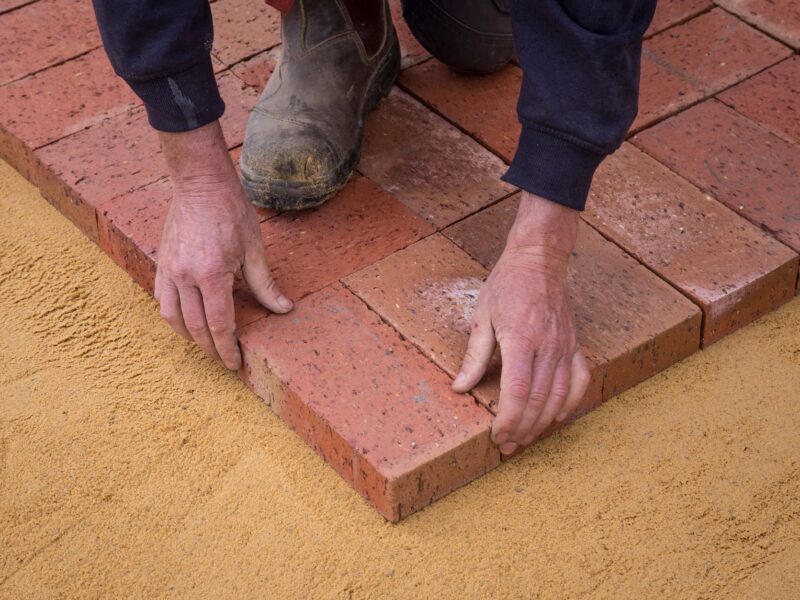
How to Keep Weeds Out of Paver Joints
Weeds and ants in paver joints come from loose sand and trapped moisture. How New Orleans homeowners keep…
Read more
Paver Driveway Cost and Options in New Orleans
What a paver driveway costs in the New Orleans metro, which pavers handle vehicle loads, and why base…
Read more